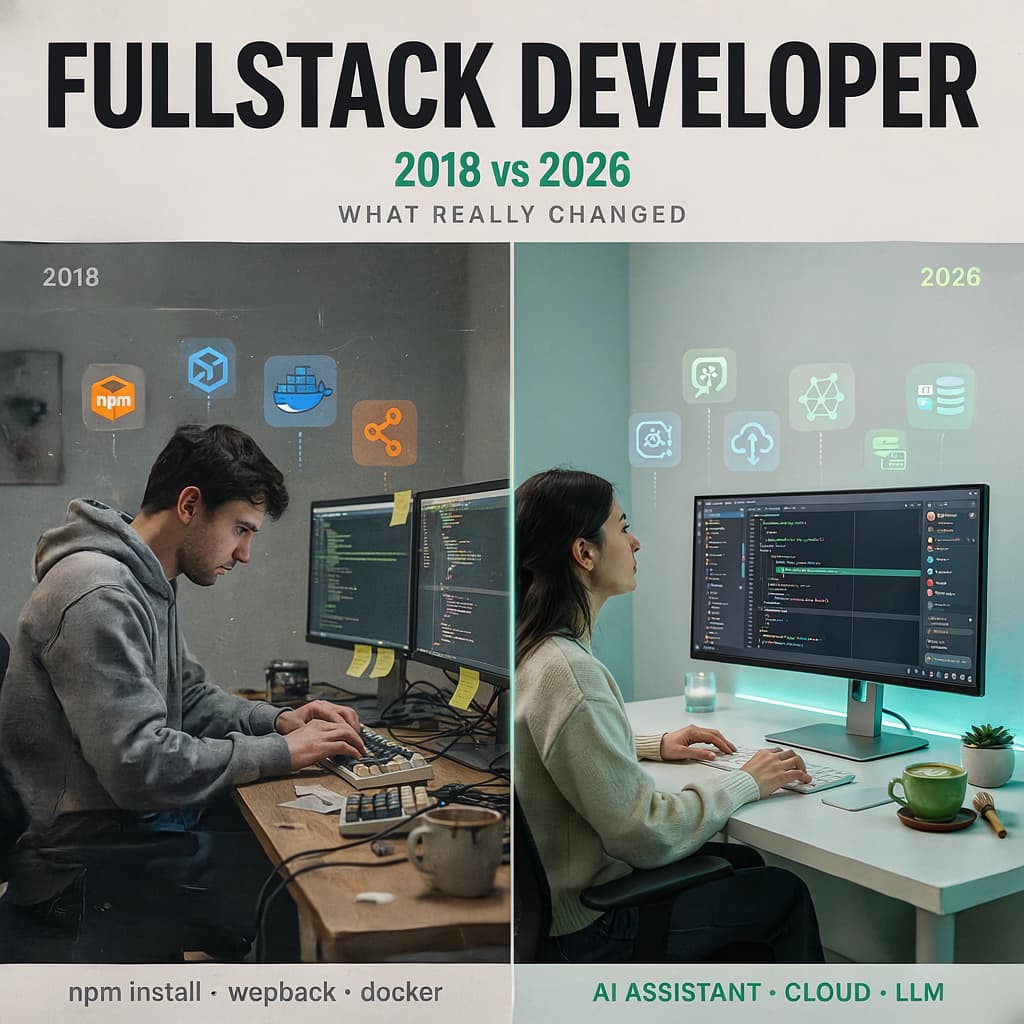
React/Next.js Trends to Watch in 2026
React Compiler, Cache Components, instant navigations, AI-native tooling: what actually matters in the React/Next.js ecosystem in 2026.

Every year brings its share of flashy announcements. But if you dig into what's actually changed in the React/Next.js ecosystem in 2026, it comes down to five real shifts — the kind that change how you write code day to day, not just what shows up on a conference slide.
Here's what actually matters, from the perspective of someone shipping to production.
1. The React Compiler Is No Longer an Experiment
For years, we sprinkled `useMemo` and `useCallback` everywhere out of habit, without always knowing if it made a difference. The React Compiler changes that: it analyzes your code at build time and applies memoization automatically, with no manual intervention.
In practice, this means:
- Less defensive code to write and maintain
- More readable components, free of manual-optimization noise
- Measurable gains: current benchmarks show a 25–40% reduction in unnecessary re-renders on real applications
The compiler doesn't replace understanding how React rendering works — you still need to know why a component re-renders. But it removes a lot of the mental overhead that used to come with that.
2. Next.js 16: Cache Components Change the Game
Next.js 16 introduces a new caching model built around the `use cache` directive, combined with Partial Prerendering. The old binary choice between a fully static or fully dynamic page is gone: you can now mix cached and request-time sections within the same route, with explicit rather than implicit control.
Another notable addition is the Build Adapters API, which makes it easier to deploy Next.js outside of Vercel, on other hosting platforms.
Then came Next.js 16.3, with improvements you actually feel while developing:
- Instant Navigations: page transitions become near-instant, with client state preserved, while keeping the benefits of Server Components
- Up to 90% less RAM usage in dev mode during long sessions
- Up to 22% more requests handled in production, with zero code changes
- Type checking can now run on TypeScript 7 during `next build`, with a noticeable speed boost
For a project like TunisiaTrip, where traffic volume and multilingual content impose strict performance constraints, this kind of improvement has a direct impact on user experience — not just on benchmark numbers.
3. Server Components Are the Default, Not the Exception
React Server Components have been stable since React 19, and Next.js's App Router remains their most mature production implementation. The question is no longer "should we adopt Server Components?" but "how much of the app actually needs to run on the client?"
In practice, a simple rule is becoming standard: server component by default, client component only when justified (interactivity, hooks, browser APIs). It's more a change in habit than a change in tooling — and it's still the point that requires the most explaining to teams migrating from the Pages Router or from classic React.
4. AI-Driven Development Is Being Built Into the Frameworks Themselves
This isn't just "AI helps me write code faster" anymore. Next.js 16.3 goes further: the framework now ships versioned documentation and "Skills" designed to be consumed directly by coding agents like Claude Code — to diagnose why a page won't fit into its static shell, for example, or to guide a version upgrade.
For a freelance developer or an agency, this means in practice:
- Version upgrades can be largely automated by an agent reading the docs matched to the correct version
- Scaffolding tools (like Vercel's v0) generate Next.js applications directly
- What's still irreplaceable: the judgment to decide whether the architecture an AI suggests actually makes sense for the product, the traffic, and the team behind it
In short, AI is changing execution speed, not the need for technical judgment.
5. TypeScript and Turbopack: The Non-Negotiable Baseline
Two things are now taken for granted on any serious project in 2026:
- TypeScript is no longer a "nice to have if there's time" — it's the baseline for any project meant to last more than a few months
- Turbopack, the Rust-based bundler, is now the default in Next.js and has replaced Webpack as the reference point for build and reload speed
These are foundations, not trends in the marketing sense — but they're what determines whether a team keeps a good velocity sixteen months after a project ships.
What Hasn't Changed
Despite all this movement, one thing still holds true: tools don't replace understanding the actual business problem. The React Compiler won't fix a bad state architecture. Cache Components aren't useful if you don't understand which data can genuinely be cached. And an AI agent doesn't know the specific context of a client or the real constraints of a production project.
In 2026, a good React/Next.js developer isn't the one who knows every new API — it's the one who knows which ones to use, and why.
---
*Working on a Next.js project and wondering how to approach a migration to version 16, or how to structure a Server Components architecture? [Get in touch](https://www.brahim-hmida.com/en/contact), happy to talk it through.*